Group Adventure Dates.  4.9 of 489 reviews
 4.8 of 232 reviews
4.9 of 489 reviews 4.8 of 232 reviews 
Experience the legendary Annapurna Circuit Trek with Everest Extreme Adventure, crossing diverse Himalayan landscapes, traditional villages, and the challenging Thorung La Pass. Discover breathtaking mountain views, vibrant local cultures, and the sacred Muktinath, creating an unforgettable Himalayan adventure.
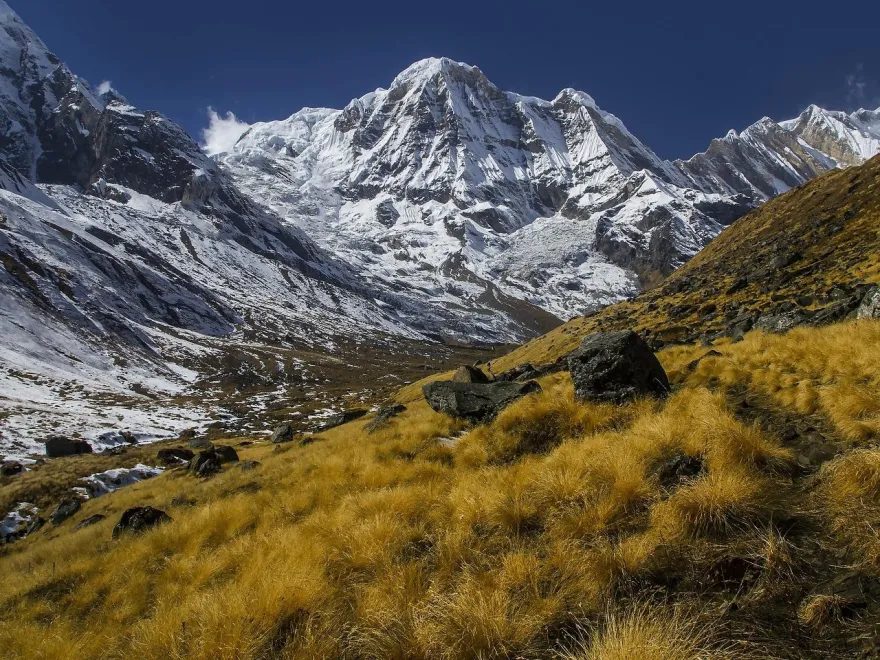
Enjoy one of the best trekking experiences in Nepal as you indulge in the trek encircling the entire Annapurna massif in Western Nepal! The 200km long trail goes past lush forests and a high mountain-pass into the Tibetan Plateau. Explore the holy site of Muktinath. Witness the majestic panorama of Annapurna I (8091m) and Dhaulagiri (8163m) peaks.
Annapurna Circuit comprises of moderate to challenging trek experience. The region is home to Annapurna Conservation Area and Annapurna I, the seventh-highest peak on Earth. Some of the other majestic mountains you’ll witness during the trek are Annapurna II, III, IV, and V, Dhaulagiri, Machhapuchhre, Manaslu, Gangapurna, Tilicho Peak, Pisang Peak, and Paungda Danda. The trek begins at Lamjung and goes into the Manang region. Upon crossing the Thorung La Pass (5463m), you’ll enter Mustang District. The trek ends with a scenic flight from Jomsom to Pokhara.
The trek begins with an adventurous drive along the massive Trishuli River and Budi Gandaki towards Besisahar. Besisahar serves as the starting point of the Annapurna Circuit. Begin trekking along with the multi-ethnic villages. The trail rises through the forested paths towards mountains in Manang District. Begin tracing the snow-filled trail that leads towards the high-mountain pass of Thorung La. Enjoy a panoramic view of the Annapurna valley and majestic mountains such as Annapurna I and Dhaulagiri before entering into Mustang District. Explore the holy site of Muktinath. One of the Mukti-Kshetra in Hindu mythology, Muktinath, remains a popular pilgrimage site for both Hindu and Buddhist adherents. Witness the 108 stone taps in the temple and visit the Buddhist memorial site dedicated to Bodhisattva Guru Padmasambhava. A part of Tibetan Plateau, the trail continues through the desert-like landscape and goes pat Kagbeni village and dry beds of Kali Gandaki towards Jomsom. The trek ends with a scenic 25min flight from Jomsom to Pokhara. Enjoy the aerial view of the beautiful Annapurna massif en route to Pokhara. The trip ends with a half-day drive to Kathmandu.
Enjoy Annapurna Circuit Trek with Everest Extreme Adventure. We offer a full-board trek package to different destinations inside Nepal. Enjoy the services ranging from domestic transportation, three meals a day, comfortable accommodation, and experienced staff on this trip. Join our fixed-departures or undertake an entire private trek.
The Annapurna Circuit Trek is one of Nepal’s most diverse and rewarding Himalayan journeys, combining dramatic mountain scenery, traditional villages, ancient monasteries, lush valleys, and high-altitude landscapes. Organized by Everest Extreme Adventure, this 13-day itinerary follows the classic route from Kathmandu through Besisahar, Chame, Pisang, Manang, Ledar, Thorung High Camp, Muktinath, Jomsom, and finally Pokhara. The trek reaches its highest point at Thorung La Pass (5,416 m), making it both an adventurous and culturally enriching experience.
The journey begins with a scenic drive from Kathmandu to Besisahar and continues toward Chame by road. From Chame onward, you gradually enter the trekking region, passing through Pisang and Manang before spending an important acclimatization day in Manang. The route then climbs toward Ledar and Thorung High Camp before crossing Thorung La and descending to the sacred pilgrimage destination of Muktinath. The final trekking section leads to Jomsom, followed by a short flight to Pokhara and a tourist-bus journey back to Kathmandu.
The best seasons for the Annapurna Circuit Trek are generally spring (March to May) and autumn (September to November). During these periods, the weather is usually more stable, the skies are clearer, and mountain visibility is excellent. Spring also brings colorful rhododendron blooms along lower sections of the trail, while autumn is particularly popular for crisp Himalayan views and generally favorable trekking conditions.
Winter can bring heavy snowfall and very cold conditions around Thorung La Pass and the higher settlements, potentially affecting trail accessibility. The summer/monsoon months can bring rain, cloudy mountain views, muddy trails, and landslide risks on lower road sections. However, conditions can vary from year to year, and the exact suitability of the route depends on weather and trail conditions.
The Annapurna Circuit Trek is considered a moderate to challenging high-altitude trek. The major challenge is not only the daily walking distance but also the significant elevation gain, particularly after Manang. The itinerary includes trekking from Chame to Pisang, Pisang to Manang via Ngawal, Manang to Ledar, and Ledar to Thorung High Camp before the demanding crossing of Thorung La Pass at 5,416 meters. The ascent should therefore be gradual and properly paced.
Everest Extreme Adventure includes transportation to make the itinerary more practical. The journey begins with a drive from Kathmandu to Besisahar, followed by a drive toward Chame. After completing the high-altitude trekking section, you descend to Muktinath and continue to Jomsom. From Jomsom, a short flight takes you to Pokhara, while the final journey from Pokhara to Kathmandu is made by tourist bus.
Food and accommodation on the Annapurna Circuit Trek are generally provided through local teahouses and lodges along the trekking route. These establishments offer a practical way to experience the mountain communities while providing basic facilities for trekkers. In places such as Chame, Pisang, Manang, Ledar, High Camp, Muktinath, and Jomsom, accommodation is typically in simple rooms, with facilities becoming more basic as altitude increases.
Meals are generally available from local lodge menus and commonly include dal bhat, noodles, rice, pasta, potatoes, soups, Tibetan-style breads, vegetables, eggs, and other simple dishes. Dal bhat—rice, lentils, vegetables, and accompanying sides—is especially popular among trekkers because it provides a filling and familiar source of energy for long hiking days.
Permits are an essential part of trekking in the Annapurna region. Before beginning the trek, travelers should ensure that the required trekking documentation is arranged correctly. Everest Extreme Adventure can assist trekkers with the necessary permit arrangements and explain the documentation required for the itinerary.
The Annapurna Circuit normally involves the Annapurna Conservation Area Permit (ACAP), as the route passes through the Annapurna Conservation Area. Depending on the current regulations and trekking arrangements, additional registration or documentation requirements may apply. Permit rules can change, so travelers should confirm the latest requirements with their trekking agency before departure.
Everest Extreme Adventure can help coordinate the paperwork so trekkers can focus more on preparation, acclimatization, and enjoying the journey.
Choosing the Annapurna Circuit Trek with Everest Extreme Adventure means experiencing one of Nepal's most iconic trekking routes through a carefully structured itinerary. The journey combines spectacular Himalayan scenery with authentic mountain culture, changing landscapes, and a memorable high-altitude adventure. The itinerary provides an acclimatization day at Manang and gradually progresses toward Thorung La Pass, helping trekkers prepare for the highest and most demanding section of the route.
Another major advantage of this itinerary is its combination of trekking and transportation. The route includes road travel from Kathmandu toward the trailhead, trekking through the Annapurna region, crossing Thorung La, visiting Muktinath, and flying from Jomsom to Pokhara. This allows travelers to experience the major highlights of the circuit within a compact 13-day program.
With its combination of adventure, culture, dramatic scenery, and high-altitude trekking, the Annapurna Circuit is an excellent choice for travelers seeking a classic Himalayan experience. Everest Extreme Adventure provides the organized framework and local support needed to make this challenging journey more manageable, enjoyable, and memorable.
The Annapurna Circuit Trek with Everest Extreme Adventure is a spectacular 13-day Himalayan journey through diverse landscapes, traditional villages, and breathtaking mountain scenery. The adventure begins with a scenic drive from Kathmandu to Besisahar and continues toward Chame. From Chame, the trail leads through Pisang and Ngawal to Manang, where an acclimatization day helps prepare for higher elevations. The route then continues to Ledar and Thorung High Camp before crossing the challenging Thorung La Pass at 5,416 meters.
After crossing the pass, trekkers descend to the sacred pilgrimage destination of Muktinath and continue to Jomsom. A scenic flight from Jomsom takes you to Pokhara, followed by a tourist bus journey back to Kathmandu. With Everest Extreme Adventure, this itinerary combines adventure, culture, mountain views, and authentic Himalayan experiences.
Annapurna Circuit Trek begins upon your arrival in Kathmandu, Nepal. We’ll welcome you at Tribhuvan International Airport and transfer you to your hotel. Enjoy one of the most excellent stays in a Three Star Rated hotel in Kathmandu. We’ll meet at our office and discuss the trek. Meet your trek guide and shop for necessary gear and equipment. Overnight in Kathmandu.
After breakfast at the hotel, you’ll embark on a private jeep and begin driving along the Trishuli River towards Besisahar. Besisahar lies 172km northwest of Kathmandu in the Lamjung District. It serves as the starting point of Annapurna Circuit Trek. Spend the rest of the day exploring the beautiful Besisahar. Observe the local lifestyle of the multi-ethnic people living in the town.
Leaving Besisahar, you’ll begin driving along with the beautiful multi-ethnic settlements towards Chame village. Chame lies 65.7km from Besisahar and serves as the headquarters of Manang District. The rugged mountainous road goes past lush forests towards Marsayangdi River. You’ll continue driving upstream overlooking the majestic Lamjung Himal in the distance. The 4hr drive will bring you to Chame village. Spend the rest of the day exploring the Himalayan town. Fewer than 1500 inhabitants are residing in the village. Overnight in Chame.
After a delicious breakfast, you’ll embark on the first day of the trek. Leave Chame and begin trekking uphill. The initial trail goes past lush forests towards Telekhu village. Continue hiking uphill and cross Bhratang village to arrive at Dhikur Pokhari. As you climb up, the vegetation becomes sparse. Almost 5hr into the trek, you’ll arrive at Lower Pisang village that lies close to the Marsayangdi River. Catch the magnificent sight of Pisang Peak (6091m) and Annapurna II en route to Lower Pisang.
Leaving Lower Pisang, you’ll begin climbing the Manang trail towards Upper Pisang. The trek continues through the Manang Sadak and goes towards Ngawal village. The settlements here resemble that of Tibet. Witness the houses made up of thatched roof and mud walls. After lunch, you’ll continue trekking towards Ghyaru village. The trail drops towards Humde village and continues through Bhraka to arrive at Manang. It may take 5-6 hours to cross 15km of the scenic trail leading from Pisang to Manang.
Enjoy a delicious breakfast and embark on a tour of the beautiful Manang village. A detour from Manang leads to Tilicho Lake (4919m), the highest oligotrophic lake in the world. Instead of going to Tilicho, you’ll spend the day exploring the valley. Manang is the largest village in the entire Manang District. You will find many teahouses, restaurants, and shops around the area. A short hike from Manang will take you to Yak pastures that offer the beautiful sight of Annapurna, Gangapurna, and Kanguru Peak. Spend the rest of the day acclimatizing and preparing for the upcoming trek. Overnight in Manang.
Leaving Manang, you’ll begin trekking towards Gurung village at 3900 meters. The initial trail encounters a tougher climb. A short walk from Gurung will bring you to Yak Kharka. Yak Kharka means ‘Yak pastures.’ After enjoying a warm lunch, you’ll continue climbing uphill towards Ledar village. Ledar lies almost 700m above Manang village. Catch the beautiful sight of Annapurna and Thorung La Peak from your hotel. Overnight in Ledar.
Leaving Ledar, you’ll begin trekking uphill towards Thorung Phedi. The initial trail encounters trekking across the rugged terrain. As you climb further up, you’ll start meeting a thick snow trail. Thorung Phedi is a small settlement located below Thorung Peak. Leave the narrow Marsayangdi stream and head uphill towards Thorung High Camp. You’ll stay put at the high camp before approaching the high pass of Thorung La. During winter, the entire trail remains covered with snow making it difficult to cross the pass.
After early morning breakfast, you’ll embark on a somewhat strenuous trek towards the pass. Begin trekking uphill along the snow moraines. The region remains secluded from the rest of Manang. You wouldn’t find any teahouses along the trail. Cross the final section to arrive at Thorung La Pass. From the top of the pass, you can catch amazing sights of some of the highest mountains on Earth. Few peaks in Tibet will also be visible from the pass. From here, you’ll begin descending to the other side towards Mustang. The rocky trail leads you to Muktinath Temple. Muktinath is considered as one of the holiest sites in Hindu mythology. It lies below Thorung La Pass. You can choose to explore the temple and other religious sites before resting for the night.
Muktinath at 3,760 meters is home to Muktinath Temple. A Mukti-Kshetra, thousands of Hindu pilgrims visit the temple every year. The pilgrims believe that circumambulating the temple and taking a shower under the 108 stone taps cleanses their sins. You can explore the temple, and then head to the other side to explore the Buddhist site of Guru Padmasambhava. According to the legend, the famed Bodhisattva Padmasambhava had meditated at Muktinath before heading towards Tibet. After exploring the religious site, you’ll begin trekking downhill and make your way towards Lubra village. The motorable road will take you to Kali Gandaki valley. Cross the dry beds of Kali Gandaki River to arrive at Jomsom. Jomsom is the headquarters of Mustang District. Catch the beautiful sight of Annapurna I in the south and Mt. Dhaulagiri in the north. Spend the evening relishing a local apple brandy called “Marpha.”
Explore the beautiful Jomsom city and shop for a local souvenir before embarking on a short flight to Pokhara. The 25min long flight will offer a scenic aerial tour of Annapurna valley along with Annapurna massif and Machhapuchhre en route to Pokhara. You can spend the day indulging in an exciting tour of Pokhara City. Explore a few of the popular activities in Pokhara. Take a boat ride at Phewa Lake and visit the Tal Barahi Temple. You can consider visiting the touristic site of Davis Falls and Gupteshwor Cave. A UNESCO designated site of Pokhara Peace Stupa remains one of the most visited places in the city. Spend the evening enjoying the vibrant environment of lakeside, Pokhara
Enjoy a delicious breakfast overlooking the majestic sight of Annapurna I and Machhapuchhre peaks. You can tour the lakeside city before embarking on a road journey to Kathmandu. Bid farewell to the beautiful city and begin driving along the massive Trishuli River towards Kathmandu City. The half-day trip will bring you back to your hotel in Kathmandu. Spend the evening enjoying a delicious farewell dinner in an authentic Nepali restaurant in the city. Overnight in Kathmandu.
On the last day, you can explore the nearby Thamel town and indulge in shopping. Buy a few souvenirs to bring back home. Almost 2hr before your flight, we’ll drive you to the airport. Bid farewell to the beautiful Kathmandu City.
Your Start Date is the day you land in Nepal, and your End Date is when you fly home.
If the set Annapurna Circuit Trek group dates don’t suit your schedule, we can offer alternative dates upon request.
Trekking is longer duration walks involves longer days from few days to a week or more within Himalayan terrain of ups and downhill with some gradual portion.
Trekking from moderate, adventurous to challenging grade which is for you to choose as per your physical fitness and ability to cope with minimum 3-4 hrs to longer 5 to 6 hours walks within fresh clean mountain air.
As long you are physically fit and in sound health with good medical history background where all age-groups and interested one can join choosing the right types of trekking itineraries with grading of walks.
Guide is recommended in all parts of the walking journey in Himalaya destinations especially around remote and isolated region of Nepal Himalaya, where trek leads beyond villages and human life in complete sheer wilderness.
Guide is best to take for one safety and to communicate with local people and to gain knowledge of the areas of trekking.
Every leading company in Nepal and as well Government Department of Tourism encourages foreign travelers to have experience guides to escort, lead and to accompany. This will benefit you in case you are lost or in worst disaster, landslide-avalanche-floods, riots and broken trails.
Guides are handy in such situation and help you in all kinds of situation where you won’t feel lonely and helpless if situation arise.
No age bar and limit where all age-groups can join in for various types of holiday provided in varied programs, where children under 16 years of age and above 70 years, should be accompanied by guardian-friends and relatives.
Depending upon the type of trekking where in moderate to adventurous program nearly all age group can join in as long they are physically fit and able to cope with long hours of ups and down-hill as well with cold temperatures wise.
Treks in Nepal considered as one of best adventure destination in all Himalaya and probably in this planet, where people can have many choice and options to choose from group joining to make your own private trip as tailor made.
Trekking and walking in Himalayan country involves much ups and downhill walks with some gradual portion, it all depends upon your choice of trekking program on most moderate treks walking for maximum 6 hrs with minimum of 3-4 hrs some days.
The only tough is climbing uphill where high passes are involved on treks with steepness and altitude wise also.
Depends upon the area and grade of trekking, for moderate and adventurous treks where one should be physically and medically fit, rest lies on each day walking hours where you will gain enough exercise and experience on Himalayan terrain and landscapes.
To be fit for the trek we suggest that after booking trips in Himalaya get prepared with some exercise at home jogging-swimming-aerobic-Zumba-walking minimum for an hour, walking on steps ups and down at least a month before departure from home country for Nepal.
Please follow our trekking equipment list as provided for extra from the list is at your own to carry or not, if it’s too much than international airlines baggage allowance more than 20-25 KGS, where you should consider yourself, if it is much important for you than pack in the bags depending upon it’s not too heavy or bulky.
Some of the things that you miss packing essential items, which you can buy in Kathmandu, as the city have large range of shopping Mall including many trekking and mountaineering shops-stores where you can purchase or rent on daily basis, like sleeping bags-duvet / down jackets and etc…
All major trips in our wide range of trekking-climbing programs where medical and travel insurance are compulsory for all clients for holiday in Himalaya destinations, where medical and other comfort lacks in remote corners of Himalaya. Medical Insurance is a must in case of emergency related to your ill health condition while on trekking or climb in Himalaya, where you might need to be evacuated the fastest way like using chopper or other means of quick transportation to reach the nearest medical facilities and good hospitals.
Medical insurance comes into action when you are fully insured covering immediate costly Helicopter services including your medical bills on treatments.
As for Travel Insurance which might arise sometimes due to bad weather conditions where domestic flights might get delayed and cancels hampering your itinerary days for some days, where you might have to break the journey in some situations.
Delay in overland journey due to bad road or broken trail conditions with landslides-floods including strikes and other political situation where the company will be forced to delay or cancel the trips or reroute to other places, where some people might not be interested or do not have much holiday in this case where you Travel Insurance Policy will take place to claim from the trip that did not happen as expected.
Nepal for all season best time from March to May, when most of the day is clear with minimum temperatures of 0° to 20° Celsius depending upon the altitude and areas. Where most of the morning till mid days clears for views and walks, sometimes afternoon can get overcast with chances of light rains and snow.
March to May will be lively with wild-flowers in full bloom especially various species of rhododendron (national flower of Nepal) from trees to short bushes.
Monsoon wet months starts from mid-June till mid-September, where most of the days gets much rain in the southern areas of Himalaya, where northern region gets less rains falls in rain shadow, where monsoon clouds blocked by Himalayan range of mountains.
October to December another good time for trekking specially on the mid hills where temperatures are mild and pleasant to walk with clear views of mountains, cold in the morning and night time with shorter day lights during autumn / fall and in winter months of December to mid-February.
If booked for high altitude treks, which involves passes above 4,500 m or 5,000 m where the pass might be closed due to heavy snow conditions, which you have to consider that the guide and the company will do their best to make the trip as per the standard itinerary days.
Transportation is an important part of this itinerary. The trip begins with a drive from Kathmandu to Besisahar and continues by road toward Chame. After crossing Thorung La and reaching Muktinath, trekkers continue toward Jomsom. From Jomsom, a short flight takes travelers to Pokhara, followed by a tourist bus journey back to Kathmandu. Everest Extreme Adventure coordinates these transportation arrangements as part of the overall trekking itinerary.
Trekking permits required in all walks in Himalayan areas the permit TIMS (Trekking Information Management Systems) which is applied to all foreign nationality as well to Indian where price differs.
Besides Trekking permits one has to obtain either national park entrance or conservation fees as per the areas of trekking destinations, all permits are obtained well in advance by your local company once you have booked the trip providing Pass Port details with photograph required on permits
Accommodation along the Annapurna Circuit is primarily provided in local teahouses and mountain lodges. Rooms are generally simple and practical, with basic beds and shared or limited bathroom facilities depending on the location and altitude. Everest Extreme Adventure arranges accommodation according to the itinerary and availability. Facilities become more basic at higher elevations, but staying in local lodges also provides an opportunity to experience authentic Himalayan hospitality.
Teahouses and lodges along the route offer a variety of simple, energy-rich meals suitable for trekkers. Common choices include dal bhat, rice, noodles, pasta, potatoes, vegetables, soups, eggs, Tibetan-style bread, and hot beverages. Dal bhat is particularly popular because it is filling and provides sustained energy for long trekking days. Everest Extreme Adventure recommends staying hydrated and carrying personal snacks such as nuts, chocolate, or energy bars.